Podcast: Play in new window | Download (Duration: 31:00 — 21.4MB)
A passenger drone hotel, a pub drone for beer delivery, UFOs that might be drones, distance-learning UAS education, flying creatures make drones better, measuring whales from above, and a close encounter with the Blue Angels.
UAV News:
A Passenger Drone Hotel: EHang and LN Holdings Make it a Reality
EHang plans to create a passenger drone hotel in China. Hotel guests could travel to and from the hotel via EHang’s passenger drones and they could take sightseeing tours of the area with the drones. The first passenger drone hotel will be in a Guangzhou coastal district. EHang and the Chinese government have an agreement to establish Guangzhou as “China’s first and the world’s leading UAM smart city.”
Video: EHang Joins Hands with LN Holdings in Building the World’s First “UAM” Theme Hotel
Irish pub using drones to fly beer to its customers during COVID-19
The doors of McKeever’s Bar and Lounge outside Dublin are closed during the pandemic. But thirsty customers have an option since McKeever’s is now using a drone to fly beer and wine to patrons.
Newly released incident reports detail US Navy’s ‘UFO’ encounters
Videos of US Navy F/A-18 fighters encountering “unidentified aerial phenomena” have been circulating for some time, and the Pentagon has officially declassified and released the videos. Now the Navy has publically released incident reports that describe many of the unidentified aircraft as “Unmanned Aerial Systems.”
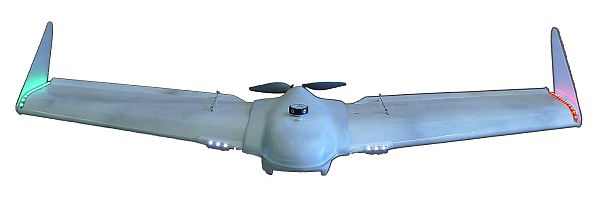
- In June 2013, the encountered “aircraft was white in color and approximately the size and shape of a drone or missile.”
- In November 2013, the aircraft was described as having a 5-foot wingspan. “…the aircraft was determined to be a UAS.”
- From a March 2014 incident: “The unknown aircraft appeared to be small in size, approximately the size of a suitcase, and silver in color.”
How Are Drone Programs Utilizing Distance-Learning Setups?
The Embry-Riddle Aeronautical University Worldwide Campus offers distance-learning for some of their drone programs. Christian Janke, the Program Chair for the Bachelor of Science in Unmanned Systems Applications program offered by ERAU, was interviewed by Jeremiah Karpowicz for Commercial UAV News. The ERAU Worldwide Campus offers distance-learning.
How the wings of owls and hummingbirds inspire drones, wind turbines and other technology
“…biomimicry draws inspiration from natural inventions to design and improve upon our current technologies.” The hummingbird offers large wing muscles to continuously flap their wings, a long chest bone for the surface area needed for those muscles, and a figure-8 wing-beating pattern. The AeroVironment’s Nano Hummingbird prototype for DARPA (the U.S. Defense Advanced Research Projects Agency) draws on these qualities.
Video: Stunning Slo-Mo Footage of Hummingbirds Hovering in Air
Video: AeroVironment’s Nano Hummingbird – 360 degree Lateral Flip
Meanwhile, the owl employs silent tactics, despite it’s huge wings. Owl wing feathers have leading-edge serrations that break up the turbulence that causes noise. Also, fringes at the end of the feathers further disburse turbulence and reduce noise. Similar turbulence-disrupting structures can reduce the noise produced by wind turbines and fans.
Video: Experiment! How Does An Owl Fly So Silently? | Super Powered Owls | BBC
I measure whales with drones to find out if they’re fat enough to breed
Many whales and dolphins spend little time at the surface of the water, so they are hard to find and difficult to study. A Southern Cross University PhD candidate and scientist plans to use drones to find and measure the length and width of whales. Using photogrammetry techniques, video will be recorded of humpback and pygmy blue whales in Australian waters. With the measurements taken, the size and volume of a whale can be calculated. This provides an indication of its health.
Video: See Blue Whales Lunge For Dinner in Beautiful Drone Footage | National Geographic
Drone Flies Dangerously Close to Blue Angels in Detroit America Strong Flyover
The name Giovanni Lucia has been associated with a drone video of the Navy Blue Angels America Strong flyover in Detroit, Michigan on May 12, 2020. At one point, the Blue Angels fly past the drone at an apparently very close range. The video is currently on the Moss Photography YouTube channel, copied from Lucia’s FB page before he took it down.

 Dr. Ken Witcher is the dean of the College of Aeronautics. In this role, Ken leads a team of more than 700 active faculty members who support more than 14,000 students enrolled in 15 degree programs. Witcher’s aviation experience includes 20 years of service in the United States Air Force. During this time, he served as superintendent of an operational test and evaluation squadron and field training detachment chief for F-15, F-16, F-22, H-60, A-10, MQ-1, and MQ-9 aircraft and supporting systems. He also served as a team member of the United States Air Force Air Demonstration Squadron, Thunderbirds. Witcher was an appointed member of the Nevada UAS test site selection panel and previously served as Chair of the Nevada Aerospace and Defense Sector Council reporting directly to the Governor’s Workforce Investment Board. Reach Dr. Witcher at
  David Thirtyacre is an assistant professor and chair of unmanned flight operations in the College of Aeronautics. He has a bachelor’s degree in mechanical engineering, master’s degree in aerospace science, and is currently a doctoral student in aviation at Embry-Riddle’s Daytona Beach campus. Thirtyacre recently retired from the U.S. Air Force with 27 years of duty in the fighter community and over 3,500 hours in fighter aircraft. He spent the last 17 years of his career at Nellis Air Force Base in Las Vegas and served as an operational test pilot and director of advanced programs at the U.S. Air Force Warfare Center. In this role, he was the point person for advanced program operational planning; and the integration of air, space, and cyberspace domains with fifth-generation aircraft, unmanned systems, national capabilities, and other Department of Defense assets. Additionally, he is a multi-engine commercial pilot and certified flight instructor – instrument. Reach David Thirtyacre at
  Stefan Kleinke is an assistant professor and program chair for the Bachelor of Science in Unmanned Systems Application (BSUSA) degree program in the College of Aeronautics. Stefan earned a Master of Aeronautical Science degree from Embry-Riddle Worldwide in 2010 and is a military aviation veteran with 15 years and 3,000 total flying hours experience as pilot and instructor on Tornado and T-38 jet aircraft. In this role, he was heavily involved in student and instructor training, standardization and evaluation, and aspects of air traffic control and airfield management. He also holds civilian qualifications that include Airline Transport Pilot License, Commercial Pilot License for helicopter and seaplane, Airframe and Powerplant Mechanic and Aircraft Electrical Technician certifications, as well as FCC GMDSS Radio Operator and Maintainer license with Ship Radar Endorsement. Reach Stefan Kleinke at